Points, levels and motivation
Does gamifying your work actually help?
Points, levels and streaks are everywhere in productivity apps. Here is what the research found, the catch it warns about, and how to make work feel like a game without it backfiring.
Sometimes, and it depends on the design. Reviews of the research find mostly positive effects on engagement and learning, but those effects depend heavily on context, and none show that points make everyday work more productive. The known catch: tangible rewards for doing a task can lower your interest in the task itself, while kind feedback tends to raise it. So keep rewards small, keep the game optional and never punish a missed day. Paw-Paw, our free Mac desktop pet, rewards activity gently, and below we say plainly where it falls short.
What the reviews found
Gamification means designing software so that it gives people the kind of experiences and motivation that games give. That is how Koivisto and Hamari’s 2019 review of the field defines it. In practice: points, levels, badges, progress bars and streaks added to a to-do list, a course or a focus timer.
The best-known early answer to “does it work?” is a 2014 literature review by Hamari, Koivisto and Sarsa, which carries that exact question in its title. Across 24 empirical studies, they found that gamification mostly had positive effects, and that those effects depended heavily on the context it was used in.
A later meta-analysis by Sailer and Homner (2020) pooled experiments on gamified learning and concluded that gamification tends to have positive effects on different kinds of learning outcomes.
So: it can help, depending on how and where. The limits:
- The meta-analysis is about learning, not office work or personal to-do lists.
- The early evidence base was small. The 2014 review rests on 24 studies.
- Neither shows a general productivity boost from adding points and levels to everyday work.
The catch: rewards can crowd out interest
The biggest caveat comes from research on rewards. In a meta-analysis of 128 studies, Edward Deci, Richard Koestner and Richard Ryan (1999) looked at how extrinsic rewards affect intrinsic motivation: doing something because you find it interesting or enjoyable in itself.
Two findings matter for anyone building a game around work:
- Tangible rewards tended to undermine intrinsic motivation when people got them for doing a task or for finishing it. In these experiments, that usually showed up as people spending less of their free time on the task once the reward was gone, and rating it as less interesting.
- Verbal rewards tended to enhance it. Positive feedback, a plain “well done”, did not have the harmful effect; it tended to raise interest.
This is often called the overjustification effect, and its conditions matter:
- It is about expected rewards that depend on doing the activity. Points, coins and levels that you earn while doing a task are very close to that case, so the warning applies directly to gamified work.
- It measured interest after the rewards stopped. It does not show that a reward always lowers performance while it is running.
The size of the effect is still argued over. An earlier meta-analysis by Judy Cameron and W. David Pierce (1994) concluded that, overall, rewards do not decrease intrinsic motivation. Where both reviews agree is on praise: they each found that verbal praise tended to raise interest.
For a game around work, that means: make it feel like feedback rather than payment, keep the prizes small, and keep the work’s own reasons in front.
Why progress bars pull you forward
The part of gamification with the clearest experimental support is visible progress. In “The goal-gradient hypothesis resurrected”, Ran Kivetz, Oleg Urminsky and Yuhuang Zheng (2006) tested an old idea from behaviorism: effort speeds up as a reward gets closer.
| Setting | What they found |
|---|---|
| A real café loyalty card | Customers bought coffee more often the closer they were to a free one; on average, the time between purchases shrank by 20% over the card. |
| An online song-rating task | People earning reward certificates visited more often, rated more songs per visit and kept going longer as they neared the goal. |
| A head start | Customers given a 12-stamp card with 2 “bonus” stamps already filled finished the 10 purchases they needed faster than customers given a plain 10-stamp card. |
| Coming back | People who sped up more towards the goal were more likely to stay in the program and came back to it sooner. |
The fine print: these were coffee purchases and a rating task on a website, not focused work. They show that a filling bar pulls people forward, not that the work along the way gets better. That pull can draw you towards the work, or towards the bar.
Rules for gamifying without it backfiring
Putting the research together, here is how we would gamify work. Rule 2 comes straight from the studies above; the others are our own judgment, informed by them.
- Reward showing up, and keep it small. Points for results turn a hard day into a lost one. But Deci’s review found that tangible rewards for simply doing a task can undermine interest too, so make the prize a nod, not a wage.
- Prefer kind feedback over prizes. Positive verbal feedback was the kind of reward that tended to raise intrinsic motivation.
- Keep it optional. You should be able to switch the game off and keep your system. Todoist does this well: Karma can be turned off, and it has a vacation mode.
- No punishment. Losing a streak, a tree or points for one bad day turns the game into avoiding loss. Some people love stakes; if a broken streak makes you quit, choose a game without them.
- Check what you are chasing. Now and then, ask whether you would still do the work with the points hidden. If not, take a break from the game.
Gamified apps compared
If you are looking for a Habitica alternative, or simply a productivity app that feels like a game, here are four well-known ones next to ours. Facts are from each app’s own pages and store listings, checked October 24, 2026; prices and features can change.
| App | How it rewards you | Stakes | Price and platforms (Oct 2026) |
|---|---|---|---|
| Habitica | Checking off habits, dailies and to-dos levels up your avatar; Gold buys in-game rewards or rewards you set yourself; you can fight monsters with friends. | Its homepage names in-game punishments alongside the rewards. | Free to sign up; web, iOS and Android. |
| Forest | A tree grows during each focus session; Plant Together lets a group share one session. | Leave for another app and the tree dies; in Plant Together, the whole group’s tree dies if anyone gives up. | Free core; Plus is a subscription whose price varies by region and platform; iOS, Android and browser. |
| Finch | A pet that grows as you do self-care exercises and goals. It is framed as self-care, not productivity. | Gentle: in Slate’s review, missed goals and long absences bring encouragement, not punishment. | Free, with in-app purchases (Finch Plus subscription; prices vary by region and offer); iPhone, iPad and Android. |
| Todoist Karma | Points for adding tasks, completing them on time, using advanced features and meeting daily or weekly goals, with streaks; levels run from Beginner to Enlightened. | You lose points for tasks five or more days overdue, and goal streaks can break. Days off and a vacation mode protect them, and Karma can be turned off. | Built into Todoist; we did not compare Todoist’s plans. |
| Paw-Paw | XP for every key press and click; a gift with an item to wear at each level. | None: it naps when you stop, with no hunger, guilt or streak to lose. | Free, optional collections bought once; Mac, macOS 13 or later. |
Who each suits: Habitica if you want a full role-playing game on your task list, with friends and stakes. Forest if your phone is the main distraction (see Forest app for Mac). Finch if you want self-care rather than work (see Finch app for Mac). Todoist Karma if you already use Todoist. Paw-Paw if you want a low-key companion on your Mac.
Where Paw-Paw fits, honestly
We make Paw-Paw, so read this part as the makers describing their own app, including the part that does not flatter it.
Paw-Paw is a free desktop pet for Mac. A small animal sits above your windows, and its paws tap as you type and click. Every key press and click fills the XP bar under it, and each new level brings a gift with an item to wear. About two minutes of steady typing sets it On Fire for double XP, and there are achievements to find along the way. Our guide to how Paw-Paw works has the details.
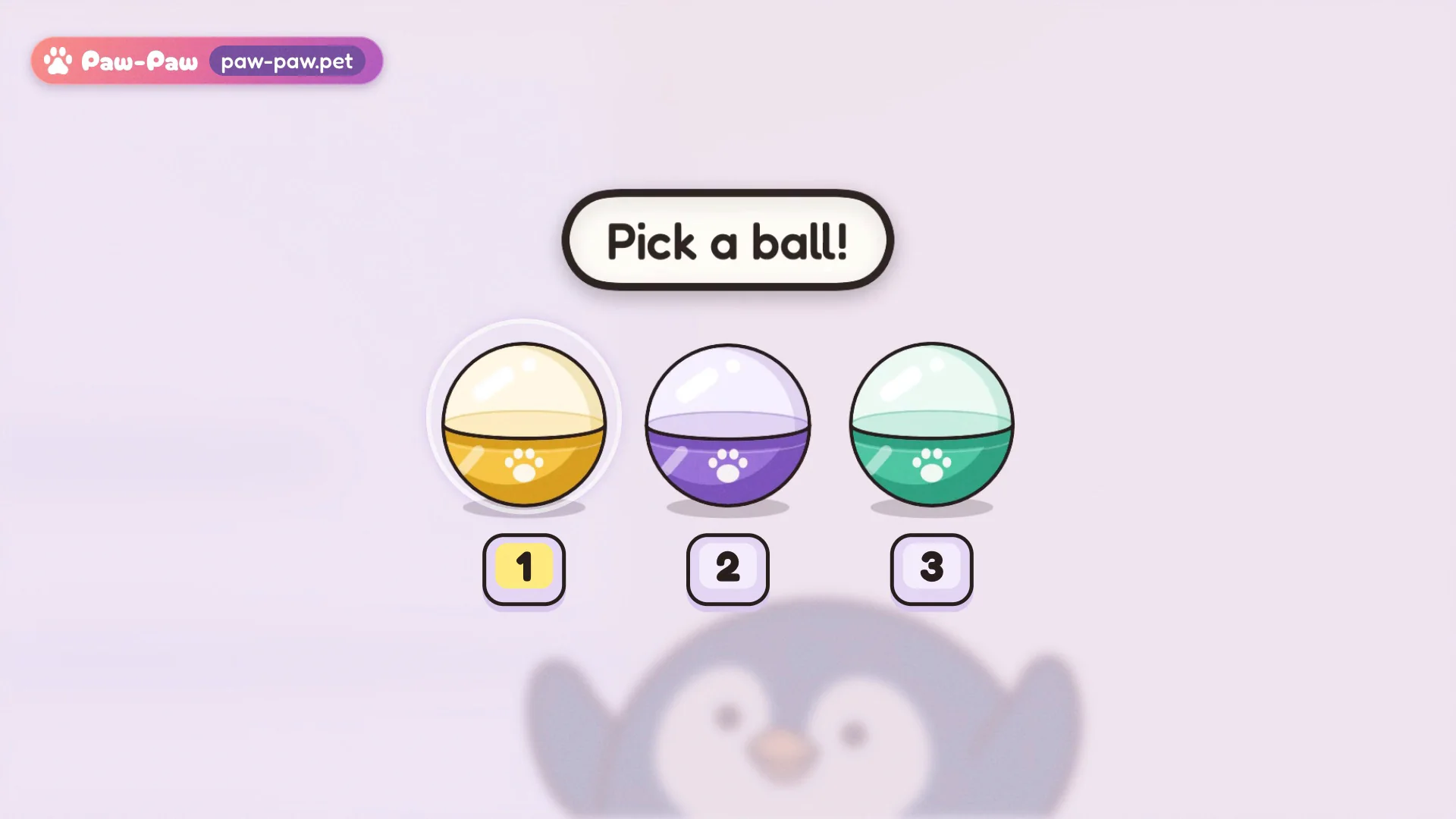
Here is the plain part. XP and gifts reward activity, not the quality of your work. Paw-Paw counts key presses and clicks, never what you type, so it cannot tell a brilliant paragraph from a messy one. A reward you expect for doing an activity is exactly the kind the overjustification research warns about, and Paw-Paw’s XP is a clear example. That is why we kept the game gentle:
Nothing is lost when you stop
After two minutes without input your Paw-Paw naps, and your next key press wakes it. There is no hunger, no guilt and no streak to lose, so the game never punishes a slow day or a day off.
Mashing keys doesn’t pay
Typing the same key over and over pauses XP, so gaming the bar doesn’t pay.
Kind words, not only numbers
When your pace dips well below your own usual pace, your Paw-Paw may offer a kind word, comparing you only with yourself. That is the verbal-feedback side of rewards, the kind that tended to raise interest in Deci’s review. Talkativeness can be Quiet, Normal, Chatty or Custom.
It stays in the background
Sound effects are off until you turn them on, and the bell on the XP bar mutes notifications. Its Stats page names your busiest hours, never your most “productive” ones, and shows today against your usual day with an arrow, never a good or bad colour. It counts activity, not output.
We do not claim that Paw-Paw makes anyone more productive, and it has not been studied as a productivity tool. Treat the gifts as a small thank-you for sitting down, not the reason you sat down; if you catch yourself typing just to fill the bar, that is the warning sign from above. If you want company more than a game, see our digital body double article or the ADHD study companion guide.
Paw-Paw needs macOS 13 or later and runs on Apple silicon and Intel Macs. Our setup guide walks through the download and the Accessibility step.
Frequently asked questions
Does gamification actually work?
Sometimes. A 2014 review of 24 empirical studies found mostly positive effects but said they depend heavily on the context, and a 2020 meta-analysis found that gamification tends to help learning outcomes. That meta-analysis looked at learning, and neither shows that points and levels make everyday work more productive.
Can gamification kill intrinsic motivation?
It can. In a meta-analysis of 128 experiments, Deci, Koestner and Ryan (1999) found that tangible rewards given for doing or finishing a task tended to lower people’s later interest in the task, while positive verbal feedback tended to raise it. Points and levels earned for doing a task are close to that first kind of reward, so it pays to keep them small and gentle.
How can I gamify my work without it backfiring?
Reward showing up rather than outcomes, keep the game optional so you can switch it off, never punish a missed day, and prefer kind feedback over prizes. If you are chasing the points rather than doing the work, take a break from the game.
What is a good Habitica alternative?
It depends on what you liked about Habitica. Forest turns focus sessions into growing trees, Finch is a self-care pet that grows as you look after yourself, and Todoist Karma adds points and levels to a to-do list. If you want something without stakes on a Mac, Paw-Paw is a free desktop pet that earns XP and gifts as you type and click, and nothing is lost when you stop.
Does Paw-Paw make you more productive?
We don’t claim that. Paw-Paw counts key presses and clicks, not the quality of your work, and it has not been studied as a productivity tool. It is a small companion that rewards activity gently, with XP, gifts and kind words, and there is no hunger, guilt or streak to lose when you stop.
Sources
- Hamari, J., Koivisto, J., & Sarsa, H. (2014). Does gamification work? A literature review of empirical studies on gamification. Proceedings of the 47th Hawaii International Conference on System Sciences.
- Sailer, M., & Homner, L. (2020). The gamification of learning: a meta-analysis. Educational Psychology Review.
- Koivisto, J., & Hamari, J. (2019). The rise of motivational information systems: a review of gamification research. International Journal of Information Management, 45, 191–210.
- Deci, E. L., Koestner, R., & Ryan, R. M. (1999). A meta-analytic review of experiments examining the effects of extrinsic rewards on intrinsic motivation. Psychological Bulletin, 125(6), 627–668.
- Cameron, J., & Pierce, W. D. (1994). Reinforcement, reward, and intrinsic motivation: a meta-analysis. Review of Educational Research, 64(3), 363–423.
- Kivetz, R., Urminsky, O., & Zheng, Y. (2006). The goal-gradient hypothesis resurrected: purchase acceleration, illusionary goal progress, and customer retention. Journal of Marketing Research, 43(1), 39–58.
- App pages: Habitica; Forest; Finch; Todoist, Introduction to Karma; Li, S. J. (2026, September 6), Finch review, Slate.

A game that never takes anything away
Free, with no ads, subscription or account. A tiny animal that types along, hands out gifts as you level up, and naps when you rest.
Download Free for MacFree · macOS 13+ · Apple silicon + Intel